
 Contact

Evelyn Rogers
Written By: Julia Brabant, August 2026For Evelyn Rogers, Pancreatic Cancer Symptoms Were Easy to Overlook
It all started with a backache.
It wasn’t the kind that sends someone rushing to the emergency room, but rather, a dull ache that Evelyn Rogers thought might be the result of lifting and carrying children for her nannying job.
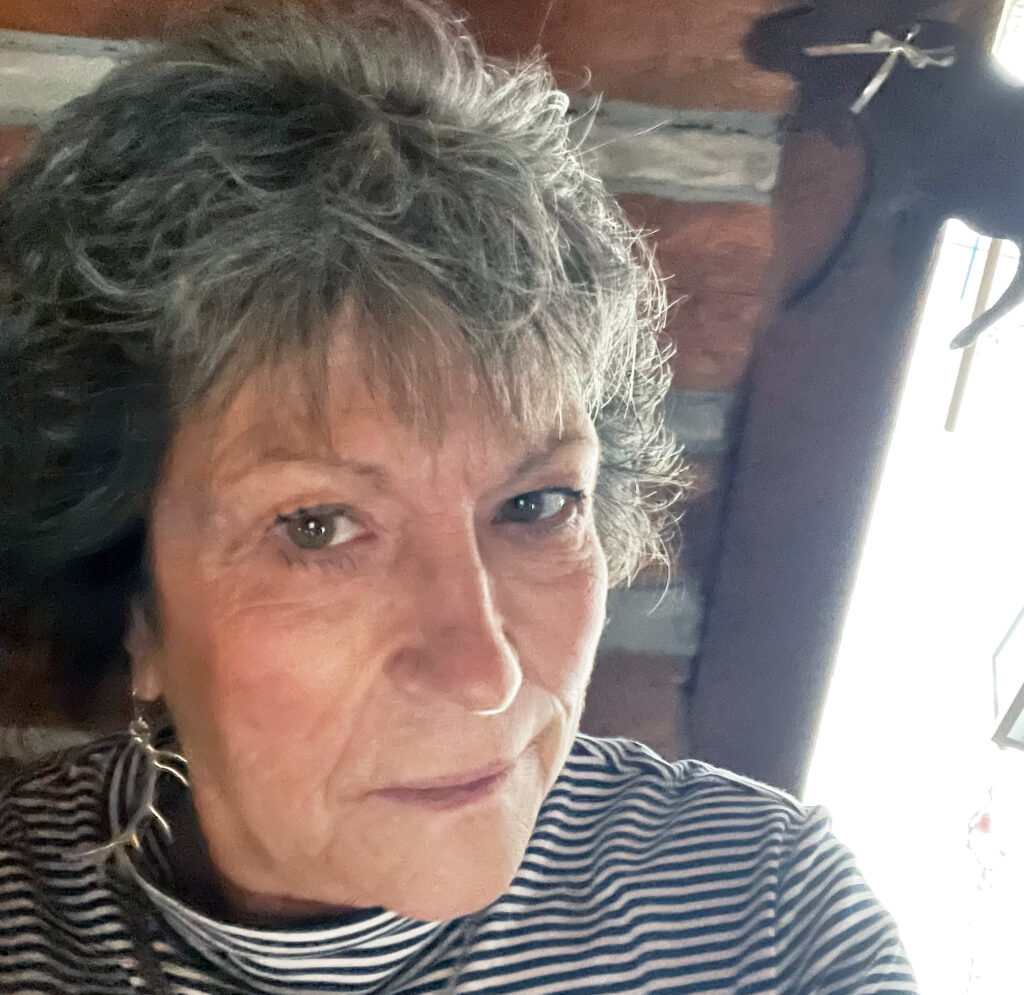
Looking back, it felt like my skin was telling me something. But at the time, I didn’t know to look at that.
When nausea, fatigue and urine with an unusual, “swirly” appearance followed, Evelyn met with her primary care physician. Initially, the PCP thought Evelyn’s symptoms might be the result of a urinary tract infection, but when her fatigue worsened, Evelyn decided to visit urgent care.
At the urgent care clinic, bloodwork revealed sky-high liver enzyme levels. The urgent care doctor called Evelyn later that evening with the results, suggesting that the issue might be hepatitis. Unconvinced, Evelyn’s PCP ordered additional bloodwork and imaging before suggesting Evelyn undergo an endoscopy.
“I still wasn’t scared,” Evelyn said. “I’m a really healthy person.”
Yet, after the endoscopy, the surgeon had sobering words.
“I see a tumor,” he said, prompting her pancreatic cancer diagnosis.
In the days and weeks that followed, Evelyn started thinking about a few “mild” symptoms that, in retrospect, might have stemmed from her condition. She recalled feeling itchier than normal, especially on her chest and abdomen. She also developed a rash on her nose, although the rash didn’t itch.
“Looking back, it felt like my skin was telling me something,” Evelyn said. “But at the time, I didn’t know to look at that.”
When she found out a leading pancreatic cancer surgeon was on staff at nearby Massachusetts General Hospital, she decided to transfer her care to the facility. After having a port installed, she started chemotherapy with FOLFIRINOX.
Many people taking FOLFIRINOX experience unpleasant side effects, and Evelyn was among them, developing severe neuropathy in her face that flared up on Christmas Eve and alarmed her loved ones. Her speech also became slurred to the point that her family members suspected she was having a stroke.
While Evelyn was fortunate in that the facial neuropathy disappeared when chemo ended, she still experiences neuropathy in her fingers and toes. Mass General also kept her on her chemo regimen longer than she expected as a result of the team’s treatment philosophy, which was to “treat what we see, and treat what we don’t see.”
Evelyn also faced another setback amid treatment after developing a severe case of RSV, landing her in the hospital and forcing her care team to pause chemo until her body recovered enough to continue. Her preference was to knock it all out as soon as possible, but she understood her team’s reasoning for taking a break.
When chemo finally concluded, Evelyn started radiation, completing 10 treatments over two weeks while taking the oral drug Capecitabine at the same time.
“Radiation has its own effects, but they’re nothing like chemo,” she said.
Despite their side effects, the chemo and radiation worked as intended, and Evelyn underwent a Whipple procedure to remove what remained of her tumor July 31, 2024.

The pancreas is pretty resilient if you still have some of it. It can still do its job.
“I can recall the pain to this day,” she said of the Whipple procedure. “But I did get better,”
After about a month of recovery, Evelyn felt well enough to start easing back into daily life. She also got to enjoy one of the moments she’d fought hard to see – her stepdaughter, Stephanie’s wedding.
Seeing so many of her loved ones together in one place also gave Evelyn a chance to reflect on the many people who helped her get to that point. Her partner, Daniel, and daughter, Olivia, supported her through every step in her cancer experience, going so far as to attend every one of her infusions at Mass General with her.
Her stepdaughters, Nicole and Stephanie, were both nurses, and Nicole’s proximity and medical background meant she could often step in in a pinch or even save Evelyn a trip to the hospital. Despite living out of town, both Stephanie and Evelyn’s son, David, also stayed closely involved from Evelyn’s diagnosis through her recovery, checking in regularly and lending support however they could throughout.
Evelyn also came from a large family herself, and while she’s lost several siblings due to breast and other cancers, her surviving siblings have rallied around her to lend support and encouragement. Her sisters, Loretta and Victoria, both traveled from Ohio to help, with Loretta keeping things running at home and Victoria helping Evelyn through her early days of recovery post-surgery.
Today, more than two and a half years past her initial diagnosis, Evelyn continues to find her footing, post-treatment. While doctors say she is “borderline diabetic,” the part of her pancreas not removed still functions to some degree, so she has not become dependent on insulin.
“The pancreas is pretty resilient if you still have some of it,” Evelyn said. “It can still do its job.”
Evelyn is also learning to manage osteoporosis, which she believes she developed as a result of chemotherapy, and has occasional bouts of pancreatitis.
Staying active doesn’t necessarily mean anything elaborate for Evelyn, either. Sometimes, it simply means getting out of the house and taking a quick walk in the woods. She’s also worked her way back to running 5Ks and plans to run the Mass General 5K this fall to raise money for cancer treatment at Mass Gen.
Evelyn also places as much emphasis on her mental and emotional health as she does her physical well-being. Stress, she notes, doesn’t help anyone facing cancer, so she works with a therapist to minimize it.
She’s also taking steps to minimize the chances that her children experience a similar fate. Genetic testing revealed that Evelyn had the BRCA1 gene mutation, which can raise one’s chances of pancreatic and other cancers. The discovery led to a preventative hysterectomy in November 2025 – an operation she said was “a breeze” compared to the Whipple – and also helped her daughter learn that she, too, had the BRCA1 mutation.
Her daughter now works with a geneticist at Mass General to take proactive steps for her own health. Evelyn, too, continues to see a geneticist at the hospital to help her determine her own next steps.
Having left her job as a nanny when the demands of caring for young children became too difficult to manage physically, Evelyn also finds herself easing back into the workforce. These days, she works part-time with older adults facing dementia.
She also volunteers with the Cancer Hope Network, mentoring people recently diagnosed with pancreatic cancer. Many of the people she speaks with are trying to understand their treatment options, prepare for side effects and navigate the sometimes-complicated family dynamics that often accompany a cancer diagnosis – areas Evelyn feels fortunate to have received support with during her own treatment at Mass General.
“I was offered help for all of those things, but not everyone is,” Evelyn said.
While Evelyn had nothing but great things to say about the care she received at Mass Gen., she acknowledges that not everyone is so fortunate. She hopes to see more attention paid to earlier diagnoses and the emotional side of cancer. She also hopes to see continued progress in the areas of KRAS mutations, daraxonrasib and after-therapies designed to help keep pancreatic cancer from coming back.
She also encourages the people she mentors to educate themselves and become active participants in their own care.
“There’s so much info out there, but it can be hard to find the ‘right’ info,” Evelyn said.
While many of the people Evelyn counsels have medical questions about chemotherapy, surgery or side effects, she finds that most of the conversations go deeper, leading to discussions about family, relationships and how life doesn’t stop changing when cancer treatment ends.
“After cancer, there’s not just guilt – everybody expects you to be the same, and you’re not the same,” Evelyn said. “That, for me, was the toughest thing.”
Evelyn continues to counsel others and closely monitor her condition and celebrated her two-year “Whipple-versary” July 31, 2026.