
 Contact

Jeanne Planey
Written By: Julia Brabant, October 2026Long-Term Pancreatic Cancer Survivor Jeanne Planey Wants Others to Know There’s Hope
Close to a decade after her pancreatic cancer diagnosis, Jeanne Planey’s experience tells a much different story than the one many people still associate with the disease.
Her own brother feared the worst when he learned about her diagnosis.
“When my brother found out, he thought about Patrick Swayze and thought I was going to go the same route,” Jeanne said. “But there’s so much out there that you can do now.”

If I could have surgery and have this wonderful team, I’d survive. I felt sorrier for my family to have to go through this than I did myself; I was really taken care of at the cancer center.
Today, Jeanne has plenty of reason to believe that. Her last chemotherapy treatment was in April 2018, and she no longer needs routine follow-ups unless she has concerns. She eats fairly normally and takes CREON with meals to help with digestion. Her pancreas no longer produces digestive enzymes because surgeons removed the portion that did so during a Whipple procedure. The part that remains produces insulin, so she has not developed diabetes. Jeanne also recognizes that her success thus far is likely due in part to the fact that doctors caught her cancer at an early stage, which is rare.
About five years before her cancer diagnosis, Jeanne developed pancreatitis. Doctors determined she had a gallstone blocking her common bile duct and treated the issue. When similar symptoms returned in the summer of 2017, she went back to the hospital, where doctors found a very small tumor in the head of her pancreas, leading to a diagnosis of pancreatic adenocarcinoma.
Jeanne sought treatment at Froedtert and the Medical College of Wisconsin, which has a well-known pancreatic cancer program. When someone there asked what she thought her future might hold, Jeanne had a ready example in her own family. Her mother had survived breast cancer as well as a cancerous tumor near her kidneys.
“If I could have surgery and have this wonderful team, I’d survive,” she remembers saying. “I felt sorrier for my family to have to go through this than I did myself; I was really taken care of at the cancer center.”
Jeanne’s faith gave her another source of strength. Family members and friends prayed for her throughout treatment, and Jeanne remains a strong believer in the power of prayer.
Jeanne’s treatment began in July 2017 with chemotherapy and radiation at the same time. Jeanne underwent radiation five days a week for six weeks while receiving weekly infusions of gemcitabine.
At first, Jeanne experienced few side effects. As the weeks passed, though, fatigue set in. With chemo and radiation happening simultaneously, she couldn’t tell which treatment caused it. When Jeanne’s team decided she was ready for surgery, she found recovery to be easier than she’d anticipated.
“The Whipple was very easy for me,” Jeanne said. “It was practically pain-free. It’s hard to believe, but I really had very little pain.”
Jeanne said her surgical team placed pain medication inside her during the procedure that provided relief through her first week after surgery. She spent about a week in the hospital and remembers the drain site causing most of the pain she did have.
Her care team gave her about a month to recover before starting chemotherapy again, this time without radiation. Her treatment included two chemotherapy pills, one taken during the day and another at night, along with weekly infusions.
This round proved harder. Jeanne developed severe mouth sores and neuropathy, and the skin on her palms became raw and painful. Her lab results didn’t show much progress, either, so doctors decided the potential benefits of continuing treatment no longer outweighed the toll it was taking and stopped chemo about a month earlier than planned.
Jeanne struggled to come to terms with the decision, although she understood it.
“I have to tell you, I really wanted to continue even with those side effects to make sure all the cancer was gone,” Jeanne said. “But they made the right decision.”
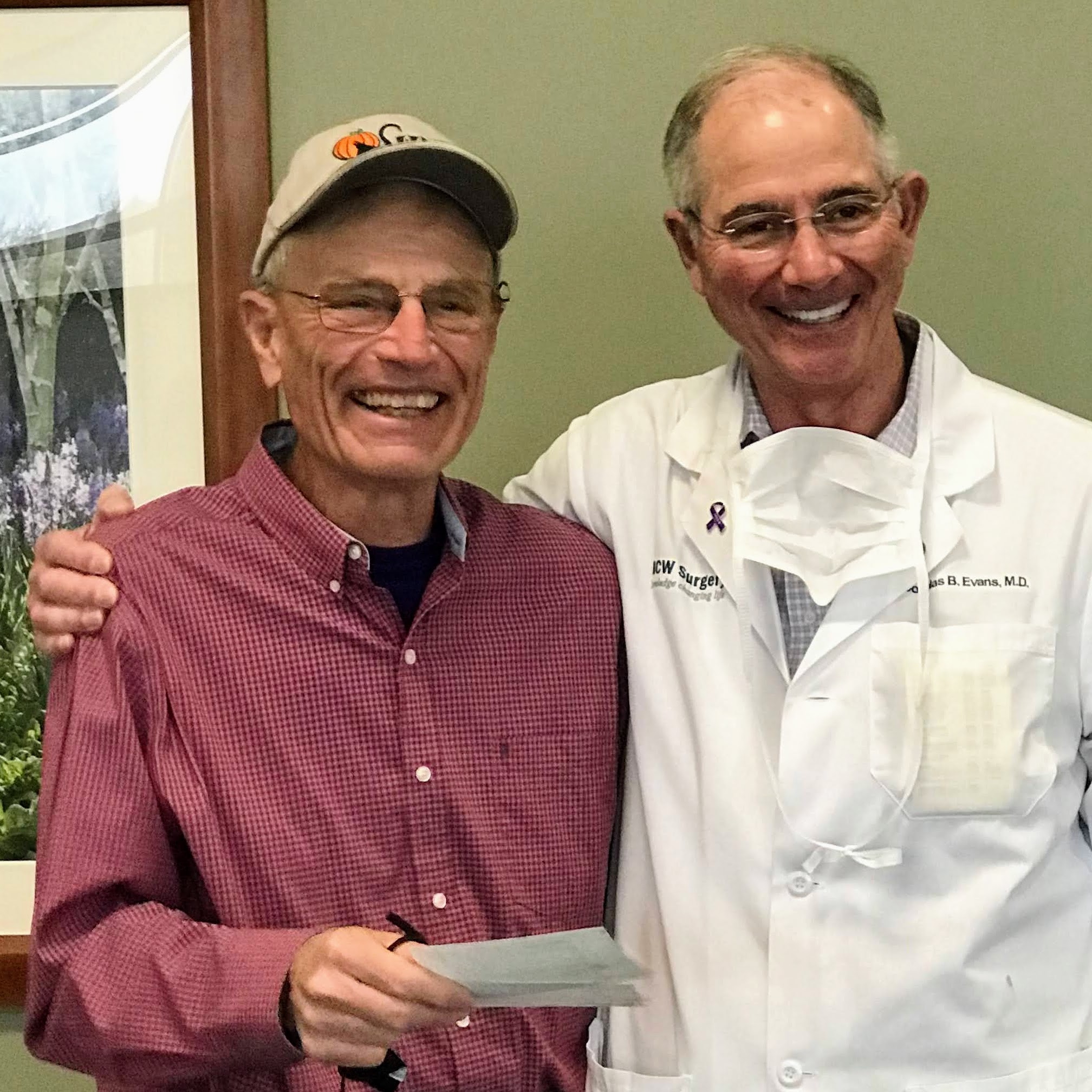
She had her final chemo treatment in April 2018. Clear checkups followed, first every three months and then at increasingly longer intervals. Jeanne continued seeing Dr. Doug Evans at Froedtert/MCW for eight years after her diagnosis, and during the last three years, she had chest X-rays to check for lung metastases before ending routine follow-ups last year.
Jeanne credits her medical team, family, friends and faith with helping her through those years. She also acknowledges that, if she had to get cancer, at least she did it at a time when she didn’t have young children at home and had already retired, allowing her to concentrate her time and energy on healing.
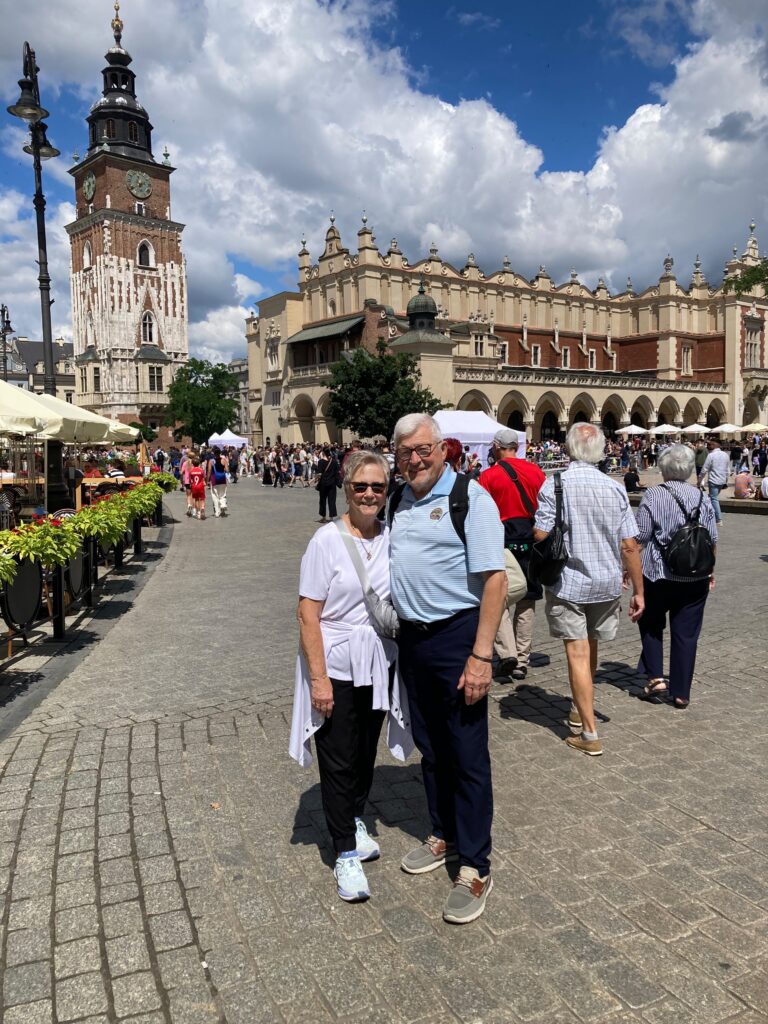
At the beginning, you get the diagnosis and you think, ohmigosh. You’re fine, and then all of a sudden, it’ll hit you in the middle of the night. You just need a hug every once in a while. I tried to keep really positive the whole time.
“At the beginning, you get the diagnosis and you think, ohmigosh,” she said. “You’re fine, and then all of a sudden, it’ll hit you in the middle of the night. You just need a hug every once in a while. I tried to keep really positive the whole time.”
Jeanne has also taken some time to think about why she might have gotten pancreatic cancer in the first place. Genetic tests showed no genetic predispositions to pancreatic cancer, but she notes that her father’s side of the family has a history of stomach and gallbladder cancers.
Her own history has piqued her interest in the relationship between pancreatitis and pancreatic cancer. Jeanne would like to see greater attention paid to that connection, especially when people experience recurring symptoms. The issue has become even more personal because her niece’s husband also developed pancreatic cancer after experiencing pancreatitis.
He now sees Dr. Mandana Kamgar at Froedtert and MCW, who also treated Jeanne. Initially, she saw a different oncologist, but underwent treatment for so long that the original one eventually retired.
Jeanne also shares her cancer experience with others and recorded a podcast with Dr. Evans a few years back to share her perspective as a survivor.
This November, she plans to take another step in supporting people with pancreatic cancer, quite literally. Jeanne and several family members will participate in the Seena Magowitz Foundation’s Steppin’ Up for Pancreatic Cancer event at Arizona State University, which raises money for research.
Looking back, Jeanne doesn’t take her outcome for granted.
“It was a very humbling experience, but with my good outcome, I’m grateful,” Jeanne said.
When asked what she’d tell someone facing the same diagnosis today, Jeanne returned to an idea that’s resonated with her since her own treatment began.
“I hope they see hope. Hope is what you have with this disease,” she said. “With some diseases, there isn’t much hope, but there’s hope for this one.”