

 Contact

Michael Cosenza
Written By: Julia Brabant, November 2026After Surgery, Recurrence and Setbacks, Michael Cosenza Found Hope Through a Pancreatic Cancer Clinical Trial
Michael Cosenza isn’t particularly afraid of dying. He’s far more concerned about what he might miss: watching his grandchildren grow up, seeing his children thrive and spending time with the family that’s given him so much to live for throughout the past four and a half years.
“The thing I’m afraid of is not death, itself,” Michael said. “It’s missing out on my grandchildren growing up and watching my kids succeed with their families. That’s what I’m afraid of.”
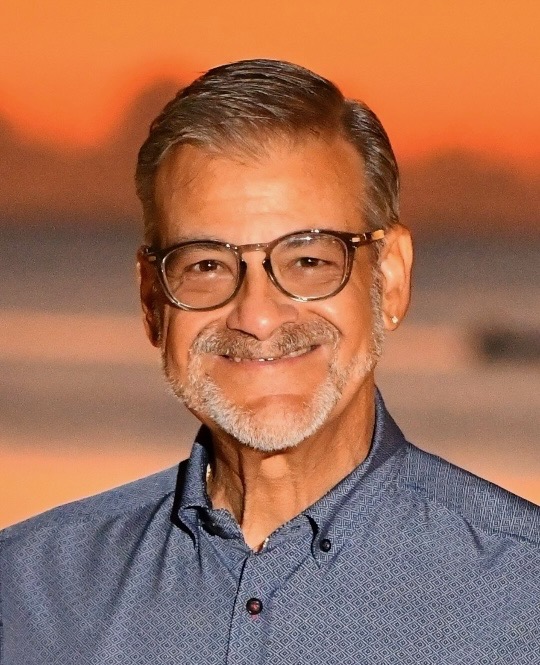
I thought I’d be done in 18 months. Everything you read is ‘18 months; two years if you’re lucky.’ I’m so grateful I’m still kicking at four-and-a-half years.
When doctors diagnosed Michael with Stage 2b pancreatic cancer in March 2022, he figured he had about 18 months left. Instead, he’s now well into a diagnosis that’s involved major surgery, two different chemotherapy regimens, radiation, a recurrence and several serious medical emergencies, too.
He’s also participating in a clinical trial at UCLA involving a KRAS inhibitor, an investigational drug that has so far kept his cancer stable. And while the treatment causes its share of unpleasant side effects, Michael is grateful to have another option after years of conventional therapies.
“I thought I’d be done in 18 months,” Michael said. “Everything you read is ‘18 months; two years if you’re lucky.’ I’m so grateful I’m still kicking at four-and-a-half years.”
Living with pancreatic cancer has changed Michael’s life in ways he never anticipated. He’s had to leave behind his career as a college professor and adjust to medical complications that have become part of his everyday life. Along the way, he’s also become increasingly comfortable talking openly about his experience, even when the conversation turns to subjects some people might rather avoid.
Michael first noticed something didn’t feel right while attending a conference in Chicago in February 2022. His back started itching, and nothing seemed to bring him any relief. He asked his wife, Mary Ellen, to take a look, but she couldn’t find a rash or any visible reason for the irritation, either, and Michael’s itchiness continued to intensify.
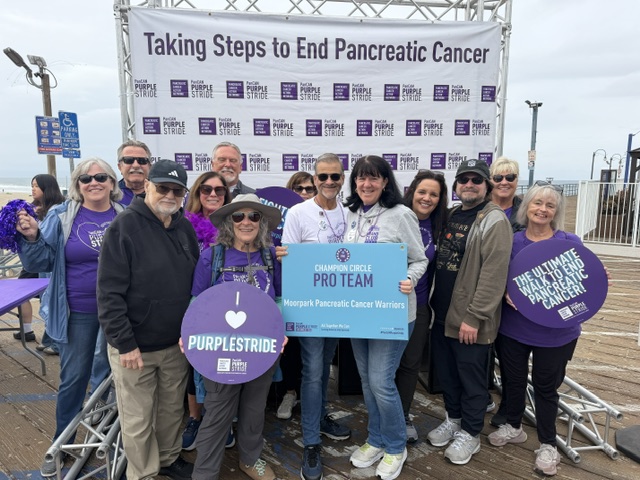
Don’t let the cancer define who you are. Stay the person you’ve always been
“It was maddening,” Michael said.
He’d also lost about 12 pounds in the preceding weeks without making any effort to do so. At the time, Michael was a bigger guy who rarely stepped on a scale, so the weight loss hadn’t raised any red flags.
His primary care physician ordered blood tests and then, upon reviewing them, called Michael personally and told him to go to the emergency room. There, doctors told him his blood counts and bilirubin levels were off the charts, and a CT scan revealed a blocked bile duct. When they tried to clear the blockage, doctors saw a tumor pressing against the duct, which was preventing the bilirubin from draining properly and causing the relentless itching.
Doctors inserted a stent and collected a sample from the tumor to biopsy, leading to a Stage 2b, possibly Stage 3, pancreatic adenocarcinoma diagnosis. The tumor was in the head of Michael’s pancreas, and the cancer had also made its way into some of Michael’s lymph nodes.
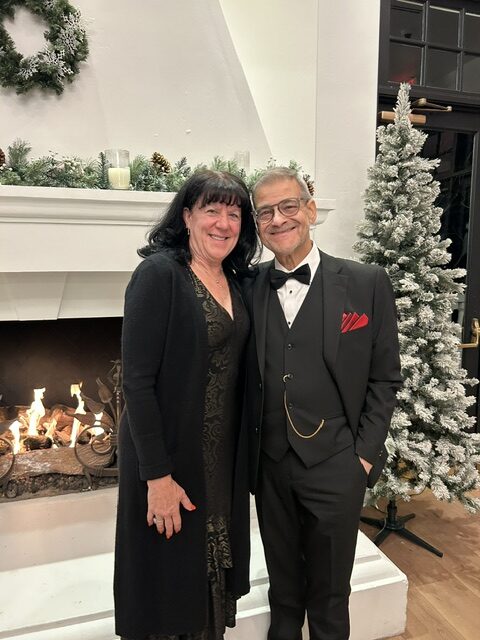
It was the first time someone in their 60s was told, ‘You’re young!’
His medical team believed they’d be able to remove the tumor in its entirety via surgery and scheduled a Whipple procedure for just one week later. In many cases, medical teams recommend chemotherapy, radiation or both ahead of a Whipple, but in Michael’s, doctors thought it best to move forward without delay. Michael also had another important date approaching, as his daughter, Terry, was set to marry the following month. Michael had no intention of missing out on the opportunity to walk her down the aisle.
During Michael’s Whipple, though, doctors realized the tumor was pressing against a blood vessel and although the surgeon thought he removed it all, the pathology revealed malignant nodes and no clean edge at the tumor’s border.
The Whipple also took a considerable toll on Michael physically.
“It’s no joke,” Michael said. “It’s like getting run over by a train.”
Michael was still recovering from surgery when his daughter married, but he was well enough to attend the wedding. Not long afterward, he started six months of chemotherapy to address the cancer that remained.
His treatment involved 12 cycles of a 5-FU-based regimen, with Michael bringing an infusion pump home after each session. He dealt with nausea, diarrhea, headaches, fatigue and thinning hair, along with gastrointestinal problems that may have stemmed from the chemotherapy, the Whipple surgery or both. Even with those side effects, his doctors felt he was tolerating the treatment fairly well.
“It was the first time someone in their 60s was told, ‘You’re young!’” Michael said.
Upon completing chemotherapy, Michael took a two-week break before starting radiation. After that, scans showed no evidence of disease for about nine months, until a scan in October 2023 revealed a Stage 3 recurrence in the area where surgeons had removed the head of his pancreas. This time, the tumor was surrounding two major blood vessels.
Faced with this news, Michael decided to seek a second opinion from Dr. Doug Evans at Froedtert & The Medical College of Wisconsin. After reviewing Michael’s case, Dr. Evans agreed with his initial physician’s sentiment that there was too much blood vessel involvement to safely consider another surgery at that time.
With surgery off the table, Michael started another chemo regimen, this time taking a combination of gemcitabine and Abraxane. He continued chemotherapy for about 11 months, and while he tolerated the new chemo regimen better than he did 5-FU, he did wind up losing all of his hair this time around.
Then, on Thanksgiving 2024, he fell quite ill, with his blood pressure skyrocketing and his wife and daughter insisting he go to the emergency room. There, doctors determined the chemo had caused kidney toxicity, forcing him to discontinue that particular treatment and start back on the old one, minus the take-home chemo pump.
Unfortunately, Michael’s hardships didn’t end there. He soon developed a blood infection that forced doctors to remove his port. He spent a week in the hospital, returned home for another week and then went back again for another weeklong hospitalization.
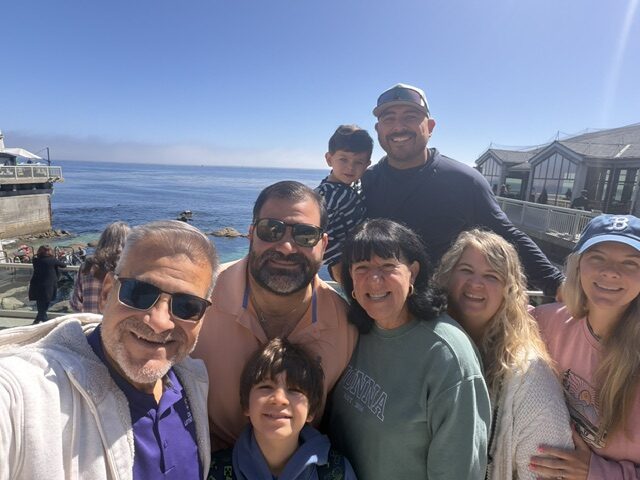
I can live with the side effects if it means I’m not dying.
By 2025, Michael had undergone three years of treatment and faced several setbacks. He wasn’t sure what the future held or what might happen next, but when a PET scan revealed malignant lymph nodes, the results came with a silver lining: the lymph node involvement made him eligible to participate in a clinical trial at UCLA involving an investigational KRAS inhibitor.
KRAS mutations contribute to the development of many pancreatic cancer cases, and researchers have been investigating drugs that target the proteins associated with these mutations. Michael’s trial medication works in a manner similar to daraxonrasib, another KRAS inhibitor seen in recent news headlines.
Mary Ellen, a pharmaceutical toxicologist, helped Michael find the clinical trial. Her professional knowledge of drug development and clinical research proved especially useful as they considered his options.
Since starting on the trial, Michael’s condition has remained stable. He does, however, face some side effects, including nausea, headaches and fatigue. Even so, he considers the trade-off to be well worth it.
“I can live with the side effects if it means I’m not dying,” he said.
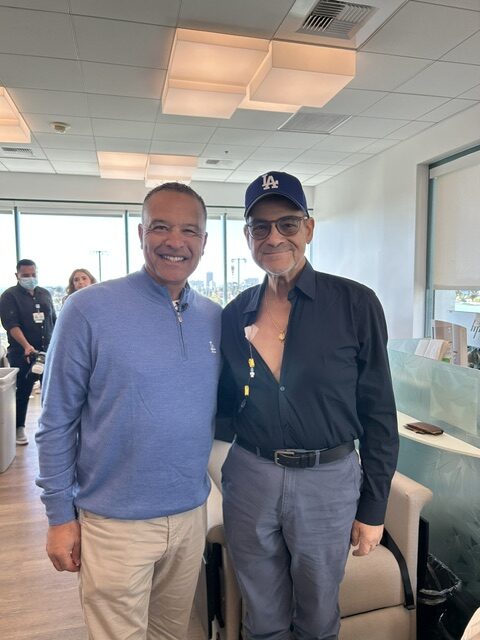
If I had a sign that said ‘Cancer Patient – Ask Me Anything You Want,’ I’d wear it.
He plans to continue treatment as long as the medication works and remains available through the trial.
Michael also underwent genetic testing to see if there were any inherited issues his children should know about. While tests showed no obvious connections, Michael questions whether there still might be some sort of genetic component, as two of his first cousins also lost their lives to pancreatic cancer (both were diagnosed after Michael). His mother and two additional cousins also had stomach cancer, with all cases occurring on his mother’s side of the family.
Throughout his experience, Michael has leaned heavily on Mary Ellen, Terry and his son, Nicholas, who lives in Belgium but remains involved and supportive from afar. He also continues to act as an “open book” when it comes to discussing his medical complications and the possibility of dying.
“I openly discussed my mortality; I posted all my updates on social media,” Michael said. “I want my friends and family to feel comfortable around me. The more open I am, the less apprehensive they are.”
After his diagnosis, Michael noticed that some friends seemed uncomfortable speaking with him directly or visiting him in person. Rather than avoid difficult conversations, he began sharing regular updates and encouraging people to ask questions.
“If I had a sign that said ‘Cancer Patient – Ask Me Anything You Want,’ I’d wear it,” he said.
His openness also extended to advocacy and fundraising efforts. Michael has participated in four PanCAN walks in Los Angeles with a team, helping raise more than $10,000 for research. For his birthday in October, he requested donations through Facebook and celebrated with a party at Santa Anita racetrack, raising another $3,000 for the Seena Magowitz Foundation.
Michael also credits pancreatic cancer support organizations with helping him find resources he’d likely otherwise have missed. Diagnosed at 60, he hadn’t considered applying for Social Security disability benefits until another member of a Seena Magowitz support group told him the condition fell within the Social Security Administration’s “Compassionate Allowances” program, which expedites disability decisions for certain serious conditions.
Michael wishes he’d learned about the program sooner and believes people facing pancreatic cancer would benefit from more guidance about financial assistance, treatment options and other resources. He also recognizes that living in Southern California has given him access to specialists and clinical trials that may be harder to come by for people in rural areas.
His advice to others is to connect with pancreatic cancer organizations early, ask questions and make time for the people and experiences that matter most.
“Take those trips. Make memories with your family. Tell the doctor you need a pause if you have an important family event,” Michael said. “Living your life to the fullest is really important if it’s going to get cut short.”
Now, four and a half years after his diagnosis, Michael continues to live with cancer and is grateful for the additional time with his family. He hopes his experience encourages others to advocate for themselves and stay informed about advances in treatment.
“Don’t let the cancer define who you are. Stay the person you’ve always been,” Michael said. “Be aggressive and assertive, and advocate for yourself. And ask questions! Make sure you understand everything being told to you. And, lastly, don’t give up hope! Look how much has changed in the last four-and-a-half years. KRAS treatments weren’t available four-and-a-half years ago. Things are constantly changing, so there’s always hope!”