

 Contact

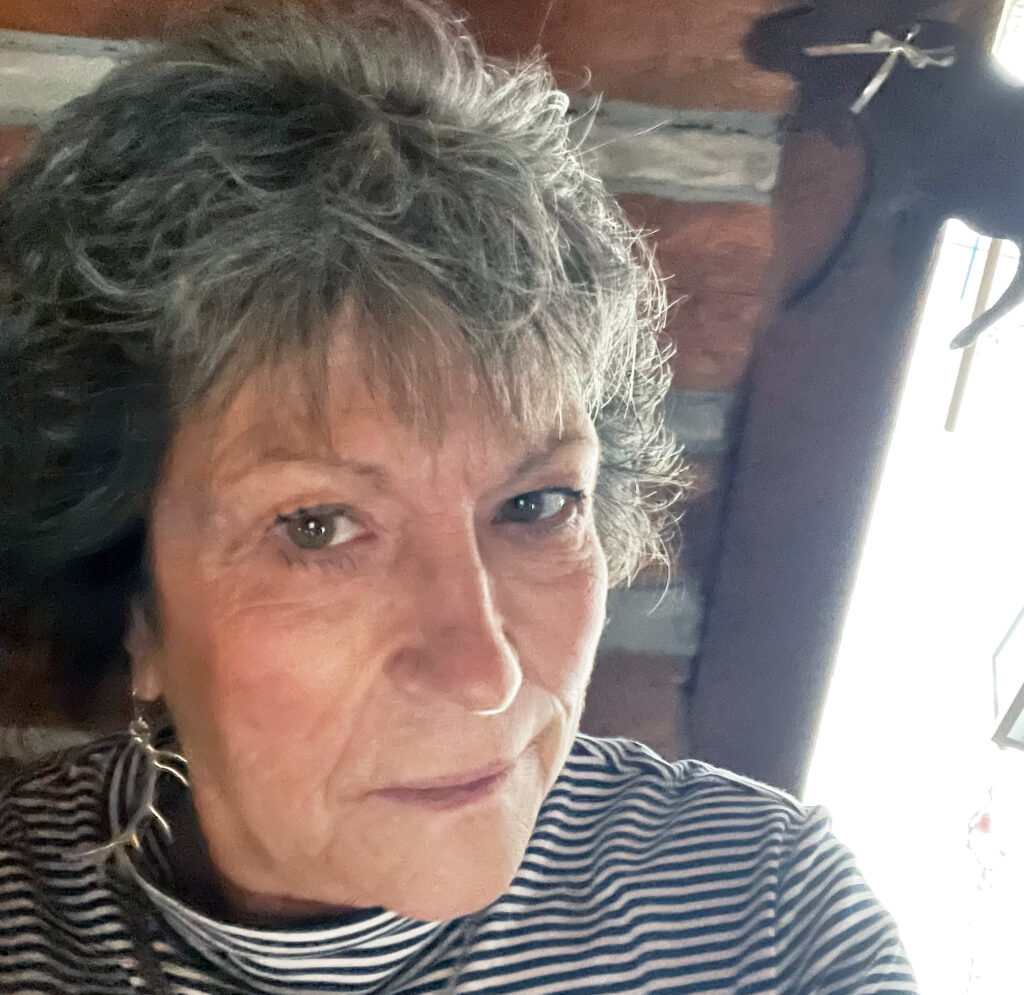
Pamela Jackson
Written By: Julia Brabant, September, 2026Facing a Pancreatic Cancer Recurrence, a Clinical Trial Gave Pamela Jackson a New Treatment Option
Pamela Jackson had no idea her drive to work one June morning in 2023 would become the dividing line between life before pancreatic cancer and everything that came after.

I’d always been in tune with my body. I know how my body is supposed to feel.
Pamela, then 59 and living in Arizona, was making her morning commute when sudden, intense nausea forced her to the side of the road to vomit. She then continued on to work, where she tried to eat an apple, but she only managed a couple of bites before the nausea hit again. She’d experienced stomach issues and bloating throughout much of her life, but something felt different this time.
“I’d always been in tune with my body,” Pamela said. “I know how my body is supposed to feel.”
Before long, flu-like symptoms followed the nausea, and soon, Pamela couldn’t even keep anything down, including water. She went to urgent care and saw Dr. Brianna Crow, someone she’d later come to refer to as “my angel.”
While screening Pamela for gallbladder and appendix problems, Crow found lesions on Pamela’s liver and a mass on the tail of her pancreas. She told Pamela to follow up with her primary care doctor.
The PCP ordered an MRI, and when the doctor called on a Saturday night to discuss the results, Pamela knew that wasn’t a good sign. While her test results were inconclusive, the doctor was concerned enough about what she’d seen to send Pamela to a gastroenterologist.
Pamela soon had an endoscopy, ultrasound and biopsy at HonorHealth in Scottsdale. Around the same time, she started losing noticeable weight, shedding about 14 pounds in five days.
By June 12, 2023, Pamela knew why.
Her doctor put it plainly, but gently: “It’s in the very early stages, but it is malignant.”
Pamela’s official diagnosis was pancreatic adenocarcinoma. An oncology surgeon recommended chemotherapy to shrink the mass ahead of surgery, and Pamela spent about two months taking a four-drug combination. Afterward, she underwent surgery to remove her spleen and the tail of her pancreas.
“You’re very fortunate,” Pamela recalls her surgeon telling her, referencing the fact that she’d caught her cancer at an early stage.
“No, I’m blessed, because God’s got me,” she’d replied.

Faith played an important part in Pamela’s treatment and recovery, and she found reminders of it in unexpected places. Shortly before completing chemo, Pamela and her sister were having coffee on the porch when a ruby-throated hummingbird stopped and hovered right in front of them. Pamela rarely saw them around her home, so something about the encounter stayed with her. Then, the next day, it happened again, and her son later gave her a ruby-throated hummingbird brooch as a thoughtful reminder of the two visits.
The encounters took on even more meaning after what Pamela faced next. Pamela was right around the corner from finishing chemo, but it seemed chemo wasn’t quite finished with her yet. During her final treatment, she experienced a serious allergic reaction to one of the drugs. Her throat started to close, and she struggled to breathe until her medical team gave her cortisone through her port.

I was very distraught; I was at my wit’s end. I thought, ‘What am I doing wrong?’ I’d changed everything, my entire lifestyle had changed a lot.
Pamela recovered from the reaction, and her cancer went into remission. She continued to have regular bloodwork, with normal results for almost two years.
That changed in July 2025, when a biopsy and CAT scan confirmed Pamela’s cancer had returned. This time, it was also in her liver, making it Stage 4.
“I was very distraught; I was at my wit’s end,” said Pamela. “I thought, ‘What am I doing wrong?’ I’d changed everything, my entire lifestyle had changed a lot.”
She also hadn’t forgotten what happened the last time she had chemo, so when her care team discussed starting it over again, Pamela initially wanted nothing to do with it.
Her doctors respected that decision but said it was their duty to inform her about all of the options available to her. Rather than return to chemo, Pamela initially chose to get her affairs in order, going so far as to pick out flowers and a burial outfit for her funeral.
However, HonorHealth’s Dr. Muhammed Khawaja soon gave her something else to consider. Pamela has a KRAS mutation, and Khawaja suggested she join a clinical trial involving daraxonrasib, a targeted therapy she could take in pill form.
Pamela decided to join the trial and began taking daraxonrasib daily while receiving biweekly infusions of gemcitabine and nab-paclitaxel. She developed a facial rash, which the doctor had warned her about, and took several prescriptions to help manage it. She also experienced nausea, vomiting and fatigue. Despite these setbacks, though, she felt fortunate to have the chance to try the new treatment, especially because she knew many people out there would welcome the same opportunity.
And Pamela’s first follow-up CAT scan showed promising results: Her tumor shrunk by 30%, and her most recent tests revealed 43% shrinkage.

It helped me out tremendously to be a part of it. It felt like family.
“It’s up and down, up and down, but better now,” Pamela said, of the emotional side of her cancer experience. “It just depends on the day. A few months ago, it was worse, but since I’ve seen some shrinkage and improvement, it’s been encouraging. But I AM human, and I go through some ‘why me’ moments.”
When they arise, Pamela finds that it helps to connect with others who’ve faced similar health hurdles. While having treatment at HonorHealth, Nurse Practitioner Sarah LeGrand introduced her to the Seena Magowitz Foundation and its support groups, and Pamela soon became a regular participant.
“I got on there and heard from everybody who could relate to what I was going through,” Pamela said. “It helped me out tremendously to be a part of it.”
A flyer about the foundation’s annual Power of Us conference in Wisconsin also caught her attention, and Pamela decided to make the trip.
“It felt like family,” she said, of the experience of meeting so many other people facing similar circumstances.
Another HonorHealth nurse offered Pamela encouragement in a smaller package. He’d given her a 1943 steel penny, explaining that the coin came from a time of tremendous uncertainty for the country and represented resilience.
Pamela held onto that penny, just as she had the hummingbird brooch from her son. Both now serve as reminders of the people who helped her through some of her most difficult moments.
Pamela’s cancer experience also affected some of the more ordinary aspects of her day-to-day life, and she started paying closer attention to the foods she eats and how they make her feel.
“I read labels now!” she said.
She stopped eating anything ending with “ose” and quit drinking wine altogether, though she hadn’t been much of a drinker in the first place. Treatment sometimes leaves a metallic taste on the tip of her tongue, and Pamela has found that cayenne pepper or other spicy foods help counter it. She also walks on cool Arizona mornings and added water aerobics to her routine, while learning not to fight her body when it tells her she needs rest.
“When I was getting sleepy, I’d fight it, but I know sleep is healing for your body now,” she said.
Pamela also no longer works and is on total medical disability, a change she says lowered her stress levels dramatically. Family members in Arizona and Houston have been huge sources of support along the way, while co-workers, former co-workers and what Pamela calls her prayer warriors have rallied around her, too.
Pamela knows better than most that a good scan doesn’t make every fear disappear. Her emotions still vary from day to day, and she doesn’t try to pretend otherwise. What has changed since those difficult months following her recurrence, though, is that she now has evidence her treatment is working.
She also has somewhere to turn when the fear starts to creep back in.
“Shock and denial are definitely there. But stay encouraged and try to get a good support system,” Pamela said. “And leave the naysayers behind. And if you’re a believer, pray!”
For Pamela, living with Stage 4 pancreatic cancer also means accepting the fact that some days will feel harder than others.
“Don’t allow this to take over,” Pamela said. “Healing starts in the mind. Mind over matter!”
MORE WARRIOR STORIES
Laura Grant
Laura Grant Trusted Her Instincts & Became an 8-Year Pancreatic Cancer Survivor

Theresa Stern Valentic
Two Generations, One Fight: 18-Year Pancreatic Cancer Survivor Theresa Valentic Overcame the Same Condition Her Mother Did Decades Earlier

Michael Francis
Michael Francis: Story of a Pancreatic Cancer Survivor